
The Saturday Afternoon Test in Optical Retail
If you have spent even one weekend managing a busy optical store, you already know the story. The showroom floor is packed with customers trying on acetate frames, two patients are waiting for their doctor refraction, and your dispensing optician is on the phone asking another store: "Do you have this tortoiseshell frame in your display, or did someone sell it yesterday?"
Optical stores are not regular clothing shops. Every single pair of spectacles combines designer fashion with high-precision ophthalmic engineering. When the software behind your counter doesn't understand dual-eye prescriptions or multi-store frame movement, small paper slips turn into expensive headaches by Monday morning.
Where Most Optical Practices Leak Revenue
Over the years talking with independent opticians and clinic directors, three recurring friction points consistently drain time and margins:
- Duplicate Frame SKUs: Every frame distributor uses their own product numbering system. If staff type them in manually, the same silhouette or Ray-Ban frame ends up in your software under three different names. You end up buying stock you already have sitting in the back room.
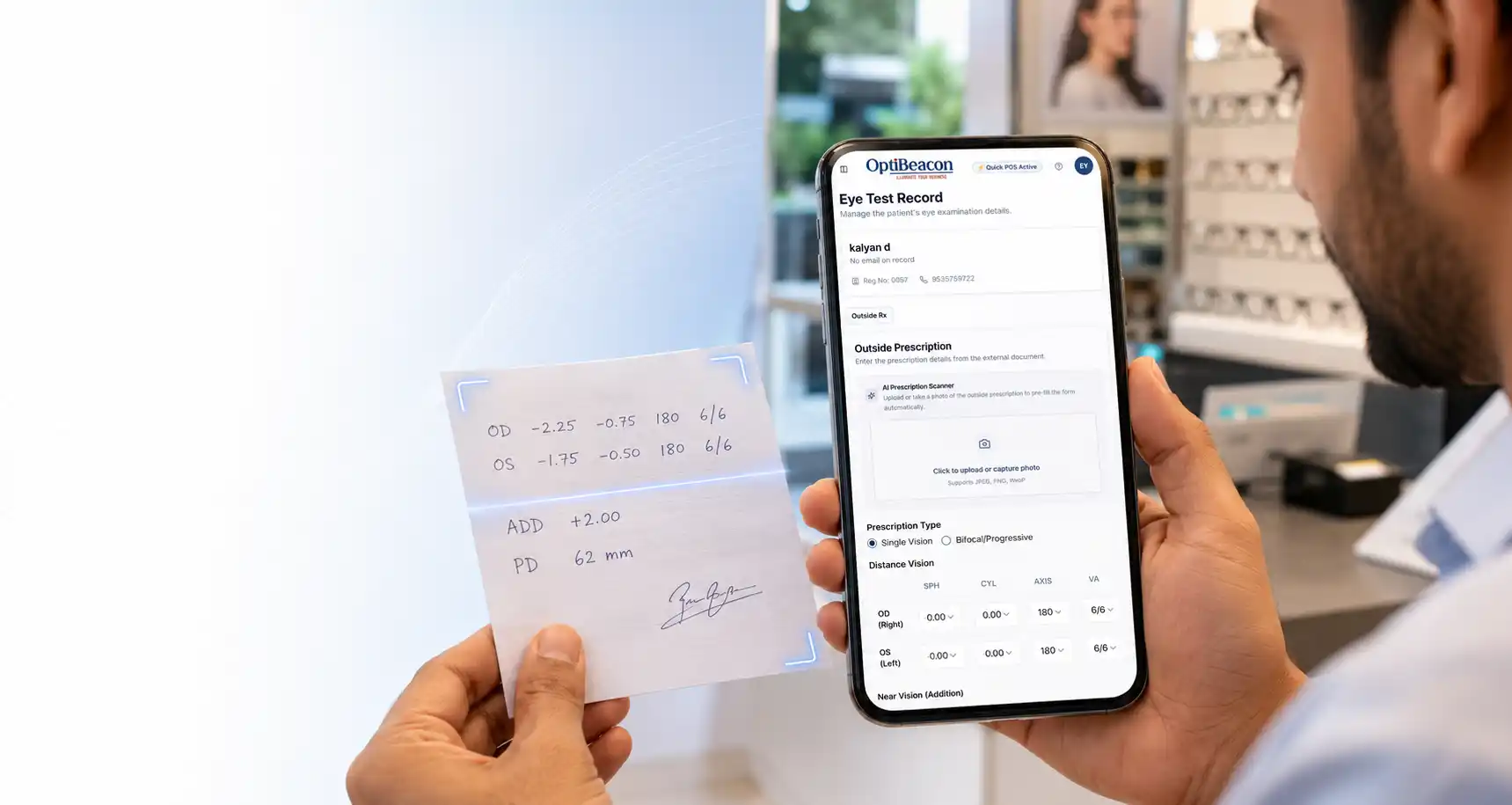
- The 10-Minute Handwriting Decipher: Reading doctor handwriting on paper slips leads to transposed numbers. Mistyping a cylinder power or flipping an axis from 15° to 105° guarantees a patient non-adapt, an expensive lab remake, and an unhappy patient waiting 10 days instead of three.
- Lost Orders Between Dispensary and Workshop: Handing paper job tickets to edging labs means someone eventually misplaces bevel bevel specs, pupil heights, or tint requests.
Three Simple Rules for a Smoother Practice
You do not need a complicated IT team to run a smooth optical business. You just need tools built specifically for our day-to-day work:
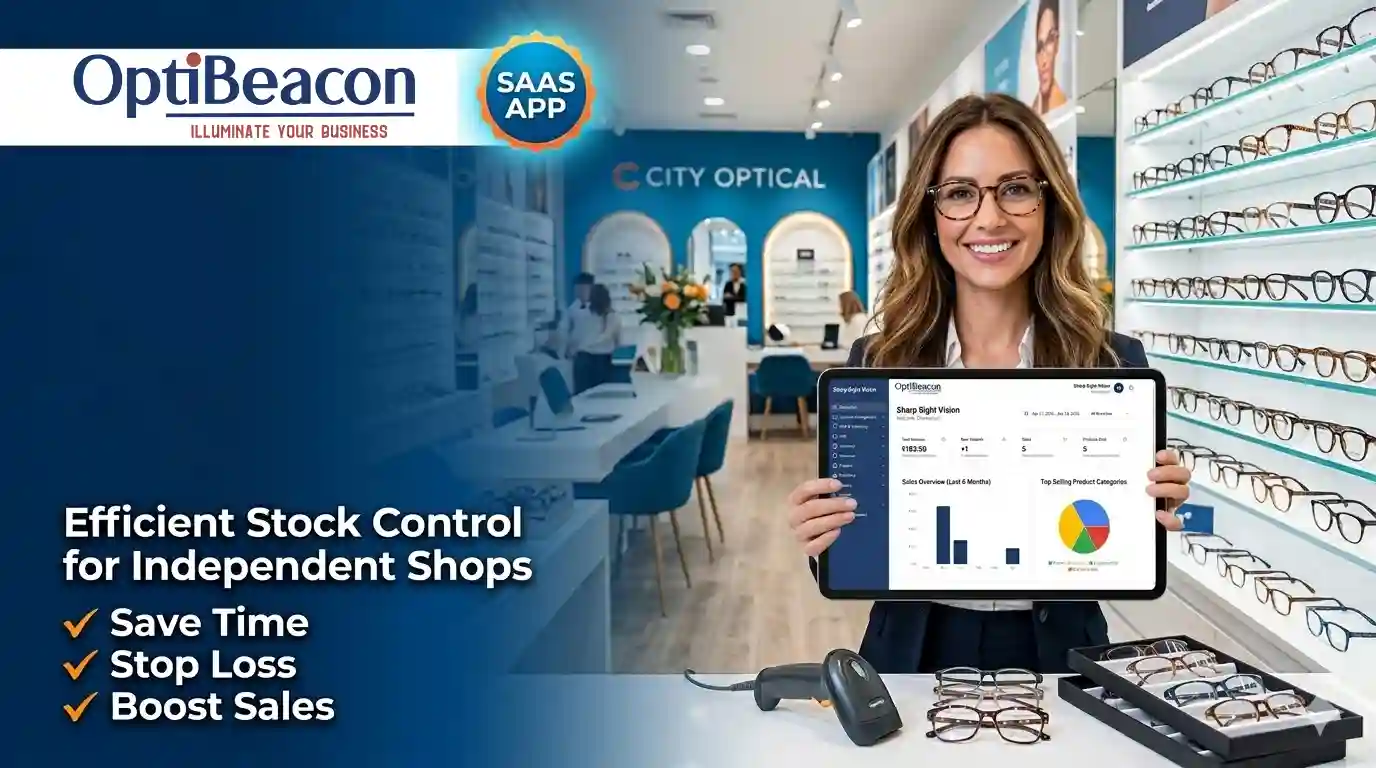
- One Central Barcode System: Tag every frame at intake with your own store barcode so stock transfers between branches happen in one quick scan.
- Camera-Assisted Rx Capture: Let staff snap a photo of the doctor prescription. Modern AI extracts the sphere, cylinder, axis, and PD values directly into the bill without anyone retyping digits.
- Live Order Tracking for Patients: When an order goes to the edging workshop, send the patient an automated SMS. When customers can track their glasses moving from "Lenses Arrived" to "Fitting Complete", they don't have to call your front desk asking for updates.
At the end of the day, good software in an optical store should be invisible. It should let your optometrist focus on patient care, your opticians focus on styling, and your weekends run without unnecessary panic.
Frequently Asked Operational Questions
Why do generic retail POS apps struggle in optical stores?
Generic POS tools do not understand dual-eye prescriptions (OD/OS, Sphere, Cyl, Axis, Add, PD) or optical lab workflows. They treat a progressive lens prescription like a standard barcode t-shirt.
What is the fastest way to reduce lens lab remakes?
Automating prescription entry and verifying cylinder and axis tolerances before sending job tickets to the edging workshop cuts avoidable remakes by more than 80%.